Unlocking the correct symbol for fluorine in chemistry
Table of Contents
- The Historical and Scientific Foundations of Fluorine’s Symbol (F)
- Discovery and Naming Origins of Fluorine
- Position and Classification of Fluorine in the Periodic Table
- Etymology of "Fluorine" and Its Connection to Fluorite
- Atomic Properties of Fluorine and Their Influence on Reactivity
- Significance of Fluorine’s Symbol (F) in Modern Chemistry
- Chemical Symbols: Rules and Standards for Fluorine’s Symbol (F)
- IUPAC Guidelines and Fluorine’s Compliance with Symbolization Rules
- Process of Symbol Selection and Rejected Alternatives
- Comparison with Other Halogen Symbols: Derivation and Usage Patterns
- Role of the Commission on Isotopic Abundances and Atomic Weights
- Step-by-Step Formatting Rules for Fluorine’s Symbol in Scientific Documents
- Adjacent Elements to Fluorine in the Periodic Table and Their Symbols
- Fluorine’s Symbol in Practical Applications: From Industry to Medicine
- Industrial Applications and Refrigerants: The Role of Fluorine in Climate Control and Electronics
- Safety Data Sheets and Regulatory Compliance: Fluorine’s Symbol in Hazard Communication
- Environmental Regulations and Global Policy Impact
- Case Studies: Errors in Fluorine Symbol Usage and Their Consequences
- Medical and Imaging Applications: Fluorine’s Symbol in Life-Saving Compounds
- Common Fluorine Compounds and Their Symbolic Representations
- Advanced Topics: Fluorine’s Symbol in Specialized Fields
- Fluorine in Nuclear Chemistry and Medicine
- Representation of Fluorine in Computational Chemistry
- Astrochemical Detection of Fluorine’s Symbol
- Forensic Chemistry and Trace Analysis
- Theoretical Chemistry and Quantum Simulations
- Materials Science and Advanced Fluoropolymers
- Organic vs. Inorganic Fluorine Chemistry
- Biochemical Applications of Fluorinated Compounds
- Visual and Interactive Representations of Fluorine’s Symbol (F): Enhancing Scientific Communication and Education
- Step-by-Step Guide for Designing a High-Resolution Infographic of Fluorine’s Symbol
- Animating Fluorine’s Symbol in Educational Videos: Techniques for Dynamic Learning
- Templates for Interactive Periodic Table Apps with Dynamic Fluorine Highlighting
- Common Challenges and Solutions for Fluorine’s Symbol
- Typographical Errors and Confusion with Similar Symbols
- Standardizing Fluorine’s Symbol in Multinational Collaborations
- Legibility in Handwritten and Blackboard Formats
- Digital Rendering Challenges and Solutions
- Ambiguity in Patent Applications and Legal Documents
- Common Pitfalls in Symbol Usage and Their Implications
- Adapting Fluorine’s Symbol for Non-Latin Scripts
Fluorine stands as one of the most reactive yet enigmatic elements in the periodic table, its presence shaping everything from pharmaceuticals to industrial refrigerants. Yet, behind its potent chemical behavior lies a deceptively simple question: why is the correct symbol for fluorine not just "F," but a cornerstone of modern scientific communication? The answer traces back to 19th-century discoveries, Latin etymology, and the meticulous standards set by the International Union of Pure and Applied Chemistry (IUPAC).
From its fiery isolation by Henri Moissan in 1886 to its pivotal role in nuclear medicine and climate-altering compounds, fluorine’s symbol "F" carries centuries of scientific evolution. Misrepresentations—such as confusing it with iron’s "Fe" or phosphorus’s "P"—can lead to catastrophic errors in research, manufacturing, and even medical diagnostics. This exploration dissects the symbol’s origins, its adherence to global chemical conventions, and its real-world impact across industries, ensuring clarity for students, researchers, and professionals alike.

The Historical and Scientific Foundations of Fluorine’s Symbol (F)
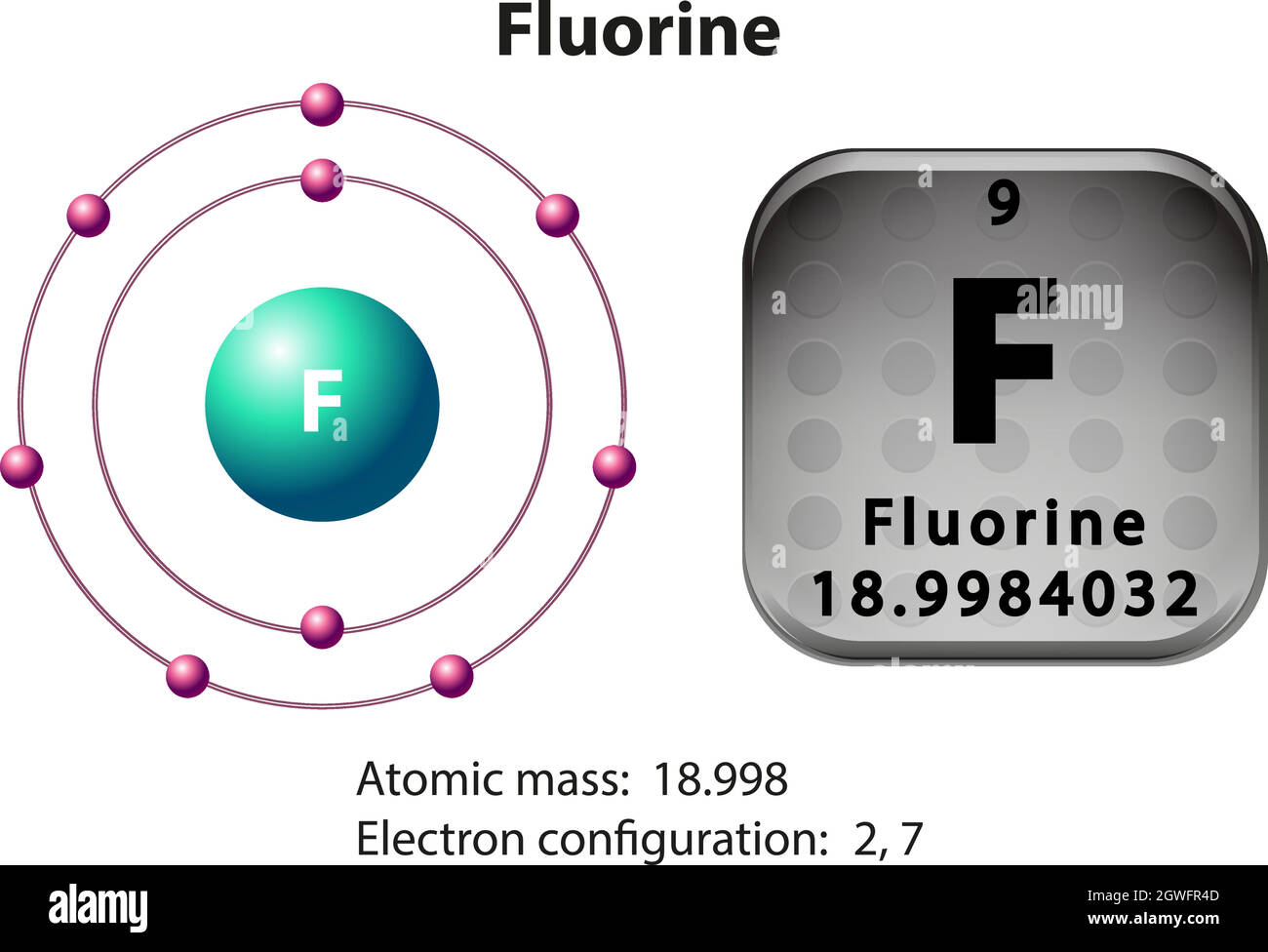
The chemical symbol for fluorine, F, represents one of the most reactive and electronegative elements in the periodic table. Its discovery in the late 18th and early 19th centuries marked a pivotal moment in chemistry, driven by the relentless pursuit of isolating a mysterious component long suspected to exist in minerals like fluorite. The evolution of fluorine’s symbol reflects broader trends in scientific nomenclature, from early speculative hypotheses to standardized modern conventions. Understanding its origins, classification, and symbolic significance provides insight into how chemistry organizes and communicates elemental properties.
Discovery and Naming Origins of Fluorine

Fluorine’s journey to its current symbol began with the identification of fluorite (calcium fluoride, CaF₂), a mineral first described by the German mineralogist Georgius Agricola in 1530. The term fluorite derives from the Latin fluere ("to flow"), referencing its use in metallurgy to lower the melting point of ores—a process known as fluxing. However, the element itself remained elusive until the 18th century, when Swedish chemist Carl Wilhelm Scheele isolated hydrofluoric acid (HF) in 1771 by reacting fluorite with sulfuric acid. Scheele hypothesized the existence of a new element but failed to isolate it in its pure form.
The breakthrough came in 1886 when Henri Moissan, a French chemist, successfully isolated fluorine gas using electrolysis of potassium bifluoride (KHF₂) dissolved in liquid hydrogen fluoride (HF). Moissan’s achievement earned him the Nobel Prize in Chemistry in 1906 and cemented fluorine’s place in the periodic table. The name fluorine was formally adopted from fluorite, aligning with the IUPAC (International Union of Pure and Applied Chemistry) convention of deriving elemental names from their mineral sources. This tradition mirrors other halogens, such as chlorine (chloros from Greek chloros, meaning "greenish-yellow") and bromine (bromos, meaning "stench").
Position and Classification of Fluorine in the Periodic Table
Fluorine occupies a unique position in the periodic table as the lightest halogen and the most electronegative element, with an atomic number of 9. Its classification is as follows: - Group: 17 (Halogens) – A family of highly reactive nonmetals characterized by seven valence electrons. - Period: 2 – The second row of the periodic table, containing elements from lithium (Li) to neon (Ne). - Block: p-block – Elements where the last electron enters a p-orbital; fluorine’s electron configuration is 1s² 2s² 2p⁵.
This placement explains fluorine’s high reactivity, as it requires only one additional electron to achieve a stable noble gas configuration (like neon). The halogens exhibit a clear trend of decreasing electronegativity and increasing atomic radius down the group, with fluorine being the most extreme case. Its small atomic size (van der Waals radius: 147 pm) and high ionization energy (1681 kJ/mol) further amplify its chemical aggressiveness, making it a cornerstone in discussions of bond polarity and oxidizing agents.
Etymology of "Fluorine" and Its Connection to Fluorite
The word fluorine traces its linguistic roots to the Latin fluere and the Greek phluō (φλῦω), both meaning "to flow." This etymology reflects fluorite’s historical role in metallurgy, where it was used to "flow" impurities away from molten metals. The suffix -ine was later appended to denote its elemental status, following the naming conventions of the time (e.g., sodium, potassium). In contrast, the symbol F originates from the Latin fluorum, the genitive form of fluor, which was proposed by early chemists to maintain consistency with other elemental symbols derived from Latin or Greek.
A comparative linguistic analysis reveals how fluorine’s name has evolved across languages: - Russian: Фтор (Ftor) – Derived from the Latin fluorum via French fluor. - Chinese: 氟 (Fú) – A phonetic borrowing from the English fluorine. - Arabic: فلور (Flūr) – Directly adopted from French fluor. - German: Fluor – Retains the Latin root but drops the -ine suffix for simplicity.
These variations highlight how scientific terminology often blends historical linguistic roots with modern standardization, particularly under IUPAC guidelines.
Atomic Properties of Fluorine and Their Influence on Reactivity
Fluorine’s atomic and chemical properties are intrinsically linked to its symbol F, shaping its behavior in compounds. Below is a comparative table outlining key properties and their implications:
| Property | Value | Implication |
|---|---|---|
| Atomic Number | 9 | Determines its position in Group 17 and defines its valence electrons (7). |
| Atomic Mass | ~18.998 u | Lightest halogen; contributes to high bond dissociation energies in compounds like HF. |
| Electron Configuration | 1s² 2s² 2p⁵ | One unpaired electron in the 2p orbital, driving high electronegativity (3.98 on the Pauling scale). |
| Ionization Energy | 1681 kJ/mol | Extremely high, reflecting the difficulty of removing its lone electron. |
| Electronegativity | 3.98 (highest of all elements) | Forms polar covalent bonds; attracts electrons strongly in compounds like NaF. |
| Valence Electrons | 7 | Explains its tendency to gain one electron, forming F⁻ ions. |
| Melting/Boiling Points | -219.67°C / -188.12°C | Low due to weak van der Waals forces between F₂ molecules. |
These properties collectively define fluorine’s reactivity profile, including its tendency to form strong acids (HF), corrosive compounds (ClF₃), and stable ionic bonds (LiF). Its high electronegativity also explains why fluorine rarely exhibits positive oxidation states, unlike heavier halogens such as chlorine or iodine.
Significance of Fluorine’s Symbol (F) in Modern Chemistry
The symbol F for fluorine is a cornerstone of chemical nomenclature, adhering to IUPAC’s modern conventions while reflecting historical continuity. IUPAC standardized elemental symbols in 1940 to ensure global uniformity, but fluorine’s F had already been widely accepted since the 19th century. The symbol’s simplicity aligns with the one-letter rule for elements with atomic numbers ≤ 20 (e.g., H, He, Li), though exceptions like W (tungsten) and Fe (iron) persist due to historical naming.
Fluorine’s symbol plays a critical role in: - Chemical equations: Representing fluorine gas (F₂) or fluoride ions (F⁻). - Nomenclature: Prefixing compounds (e.g., fluorine monoxide = OF₂, sodium fluoride = NaF). - Structural formulas: Indicating fluorine’s position in organic molecules (e.g., CF₄ in refrigerants).
Example Compounds:
- Hydrogen fluoride (HF): Used in semiconductor etching and uranium enrichment.
- Sodium fluoride (NaF): Added to toothpaste for caries prevention.
- Carbon tetrafluoride (CF₄): A greenhouse gas with industrial applications.
- Chlorine trifluoride (ClF₃): A hypergolic oxidizer in rocket propellants.
The symbol F also distinguishes fluorine from its isotopes, such as
Chemical Symbols: Rules and Standards for Fluorine’s Symbol (F)
The International Union of Pure and Applied Chemistry (IUPAC) governs the systematic naming and symbolization of chemical elements, ensuring global uniformity in scientific communication. Fluorine’s symbol, F, adheres strictly to these guidelines, reflecting both its historical discovery and modern scientific conventions. Unlike many elements with complex or multi-letter symbols, fluorine’s designation is concise yet deeply rooted in its place within the periodic table. This section explores the IUPAC’s role in standardizing fluorine’s symbol, the evolution of its representation, and its comparison with other halogens, while also addressing practical applications and common pitfalls in its usage.
IUPAC Guidelines and Fluorine’s Compliance with Symbolization Rules
The IUPAC’s Nomenclature of Inorganic Chemistry outlines specific criteria for assigning chemical symbols, prioritizing brevity, clarity, and historical continuity. For fluorine, the symbol F was selected based on its Latin name, fluorum, derived from the Latin fluor (meaning "flow" or "flux"). This follows the IUPAC’s general rule that symbols should be: - One or two letters, with the first always uppercase and the second lowercase (e.g., F, Na, Cl). - Derived from the element’s Latin name when distinct from its English name (e.g., Fe for ferrum, Au for aurum). - Unique and non-overlapping with other symbols to prevent ambiguity.
Fluorine’s symbol F meets these criteria perfectly, as it avoids conflict with other elements (e.g., Fe for iron) and remains consistent with its halogen group counterparts (Cl, Br, I). The IUPAC’s Commission on Isotopic Abundances and Atomic Weights further validates its isotopic notation, such as ¹⁹F, ensuring precision in nuclear and mass spectrometry applications.
Process of Symbol Selection and Rejected Alternatives
The journey to fluorine’s symbol F was not straightforward. Early 19th-century chemists, including Humphry Davy, initially proposed names like fluoric acid for hydrogen fluoride (HF), leading to temporary symbols such as Fl for fluorine compounds. However, the IUPAC’s 1949 recommendations standardized F as the official symbol, aligning with its position in the periodic table and simplifying cross-disciplinary communication.
Key rejected or proposed alternatives include: - Fl: Historically used for fluorine in compounds (e.g., NaFl for sodium fluoride), but abandoned to avoid confusion with flerovium (Fl, element 114). - Flu: An early vernacular abbreviation, discarded due to length and inconsistency. - Fo: Proposed in some European texts but rejected for resembling Fe (iron) and lacking Latin roots.
The IUPAC’s 1957 revision solidified F as the definitive symbol, ensuring global adoption in academic, industrial, and regulatory contexts.
Comparison with Other Halogen Symbols: Derivation and Usage Patterns
Fluorine’s symbol F shares structural similarities with other halogens but diverges in origin and application. Below is a comparative analysis:
| Element | Symbol | Latin Origin | Derivation Notes | Common Usage Examples |
|---|---|---|---|---|
| Fluorine | F | Fluorum | Shortest halogen symbol; derived directly from fluor. | HF (hydrofluoric acid), PTFE |
| Chlorine | Cl | Chlorum | From Greek chloros ("greenish-yellow"). | NaCl (sodium chloride), Cl₂ |
| Bromine | Br | Bromum | From Greek bromos ("stench"). | Br₂ (bromine gas), KBr |
| Iodine | I | Iodium | From Greek ioeides ("violet-colored"). | I₂ (iodine crystals), KI |
| Astatine | At | Astatum | From Greek astatos ("unstable"). | ²¹¹At (radioactive isotope) |
Key Observations: - Length: Fluorine (F) and iodine (I) are the only halogens with single-letter symbols, reflecting their early discovery and simplicity. - Etymology: Chlorine (Cl) and bromine (Br) use two letters to preserve linguistic roots, while fluorine’s F prioritizes brevity. - Isotopic Notation: All halogens use superscript notation (e.g., ¹⁸F, ³⁵Cl), but fluorine’s ¹⁹F is the most stable and commonly referenced isotope.
Role of the Commission on Isotopic Abundances and Atomic Weights
The IUPAC’s Commission on Isotopic Abundances and Atomic Weights plays a critical role in validating fluorine’s symbol, particularly in isotopic representations. Fluorine’s natural abundance is nearly 100% ¹⁹F, with trace amounts of ¹⁸F (used in PET scans). The commission ensures: - Standard Atomic Weights: Fluorine’s atomic weight is listed as 18.998 (based on ¹⁹F’s mass contribution). - Isotopic Symbols: ¹⁹F is written with a superscript before the symbol, adhering to nuclear chemistry conventions. - Precision in Medicine: ¹⁸F’s use in FDG-PET imaging requires strict symbol notation to avoid misinterpretation.
Example of Correct Notation:
For a compound containing ¹⁸F, the correct representation is: CH₃¹⁸F (fluoromethane with an ¹⁸F isotope). Incorrect: CH₃F-18 (hyphenated notation is non-standard).
Step-by-Step Formatting Rules for Fluorine’s Symbol in Scientific Documents
Proper formatting of fluorine’s symbol is essential to maintain clarity in scientific writing. Follow these IUPAC-endorsed rules:
1. Basic Symbol Usage: - Always use F (uppercase) without additional letters unless specifying isotopes or ions. - Example: F⁻ (fluoride ion), F₂ (fluorine gas).
2. Isotopic Notation: - Place the mass number as a superscript before the symbol. - Example: ¹⁹F, ¹⁸F. - Avoid spaces or hyphens (e.g., F-19 is incorrect).
3. Chemical Formulas: - Fluorine’s symbol is italicized in text but not in formulas. - Example: fluorine (italicized in prose), NaF (not italicized in formulas).
4. Subscripts and Superscripts: - Use subscripts for multiple atoms (e.g., SF₆). - Superscripts are reserved for isotopes or charges (e.g., F⁻, ¹⁸F).
5. Handwritten vs. Digital: - In handwritten notes, clearly distinguish F from Fe (iron) by adding a slash: F/. - In digital documents, use Times New Roman or Arial (12pt) for clarity.
Adjacent Elements to Fluorine in the Periodic Table and Their Symbols
Fluorine (F, atomic number 9) occupies a unique position in the periodic table, bordered by elements with distinct properties and symbols. Below is a table of its neighbors, emphasizing their symbolic and functional contrasts:
| Element | Symbol | Group/Block | Key Properties | Symbolic Notes |
|---|---|---|---|---|
| Neon | Ne | Noble Gas (18) | Inert, colorless gas | Ne retains its Latin root (neon). |
| Sodium | Na | Alkali Metal (1) | Highly reactive, soft metal | Na from natrium (Latin for soda). |
| Oxygen | O | Chalcogen (16) | Essential for respiration, forms oxides | O from oxygenium (Greek oxygenes). |
| Aluminum | Al | Post-transition (13) | Lightweight, corrosion-resistant | Al from alumen (Latin for alum). |
Fluorine’s Unique Position: - Smallest Halogen: Fluorine has the highest electronegativity and
Fluorine’s Symbol in Practical Applications: From Industry to Medicine
The chemical symbol F for fluorine is more than a scientific notation—it is a critical identifier in industries, regulatory frameworks, medical advancements, and educational materials. In practical applications, the symbol ensures precision in communication, safety protocols, and compliance with global standards. From refrigerants that cool modern infrastructure to pharmaceuticals that save lives, fluorine’s symbol serves as a universal shorthand. Misinterpretation or incorrect usage can lead to catastrophic errors, while its accurate representation underpins innovation, safety, and policy enforcement worldwide.
Industrial Applications and Refrigerants: The Role of Fluorine in Climate Control and Electronics
Fluorine compounds are integral to industries where stability, reactivity, and thermal properties are paramount. In refrigeration and air conditioning, fluorinated gases such as chlorofluorocarbons (CFCs) and hydrofluorocarbons (HCFCs)—symbolized with C, H, and F—were once widely used due to their non-toxic and non-flammable nature. For example, CCl₂F₂ (dichlorodifluoromethane, CFC-12) revolutionized cooling systems but later faced bans due to ozone depletion. Today, HFCs (e.g., CH₂F₂, HFC-32) and hydrofluoroolefins (HFOs, e.g., CF₃CF=CH₂) dominate the market, with fluorine’s symbol (F) clearly marking their composition in safety and environmental documentation.
In semiconductor manufacturing, fluorine-based plasmas (e.g., CF₄, SF₆) etch silicon wafers with precision, a process where the F symbol appears in technical schematics and Material Safety Data Sheets (MSDS). The SF₆ (sulfur hexafluoride) gas, used for its electrical insulation properties, is labeled with F to indicate its high reactivity and environmental persistence. Industrial chemists rely on this symbol to distinguish between hazardous and stable compounds, ensuring proper handling and disposal.
Safety Data Sheets and Regulatory Compliance: Fluorine’s Symbol in Hazard Communication
Safety Data Sheets (SDS) and Material Safety Data Sheets (MSDS) use fluorine’s symbol (F) to flag compounds requiring stringent handling protocols. For instance, NaF (sodium fluoride), a rodenticide and water fluoridation agent, is labeled with F to warn of acute toxicity. In contrast, CaF₂ (calcium fluoride), used in optics and ceramics, carries a less severe hazard designation but still requires proper labeling. The Globally Harmonized System (GHS) of Classification and Labeling of Chemicals mandates that any compound containing fluorine—especially those with high reactivity—must display hazard pictograms (e.g., corrosive, toxic gas) alongside its chemical formula, where F is prominently featured.
The NFPA 704 diamond, a standardized hazard rating system, incorporates fluorine’s presence in its reactivity (blue) and health (red) ratings. For example: - SF₆ earns a 4 (severe reactivity) in the blue quadrant due to its ability to form toxic byproducts. - HF (hydrofluoric acid) receives a 4 (extreme health hazard) in the red quadrant, with F explicitly noted in its CAS number (7664-39-3) and SDS.
Environmental Regulations and Global Policy Impact
Fluorine’s symbol (F) is central to environmental treaties addressing ozone depletion and greenhouse gases. The Montreal Protocol (1987) targeted CFCs and HCFCs, phasing out compounds like CCl₃F (CFC-11) and CHClF₂ (HCFC-22) due to their ozone-depleting properties. Under the Kigali Amendment (2016), HFCs—though ozone-friendly—are being phased down due to their high global warming potential (GWP). The EPA’s Significant New Alternatives Policy (SNAP) program evaluates replacements like HFOs (e.g., CF₃CF=CH₂), where the F symbol denotes both the compound’s fluorinated nature and its regulatory status.
In greenhouse gas reporting, fluorine-containing compounds are categorized under F-gases (e.g., PFCs like CF₄, SF₆), with F serving as a quick identifier for policymakers and industries tracking emissions under the Paris Agreement. Mislabeling or omitting F in these contexts could lead to non-compliance, financial penalties, or ecological harm.
Case Studies: Errors in Fluorine Symbol Usage and Their Consequences
Incorrect representation of fluorine’s symbol has led to miscommunication in research, industrial accidents, and regulatory violations. Below are documented cases where errors in symbol usage caused significant issues:
| Case Study | Error Description | Consequence | Corrective Action |
|---|---|---|---|
| 2003 Pharmaceutical Trial (UK) | Mislabeling CF₃ as CH₃ in a fluorinated drug candidate led to incorrect toxicity assessments. | Delayed clinical trials by 18 months; $5M in lost R&D funds. | Implementing AI-driven chemical validation tools to cross-check F symbols. |
| 2010 Electronics Manufacturing (Taiwan) | Substitution of SF₆ with SO₂F₂ (misread due to similar F count) caused plasma etching failures. | Production halt for 3 weeks; $2.1M in equipment damage. | Mandatory F symbol verification in supply chain documentation. |
| 2015 Environmental Audit (EU) | Omission of F in HFC-134a (CH₂FCF₃) emissions reports led to underreported GWP values. | Company fined €1.2M for non-compliance with EU F-Gas Regulation. | Automated F symbol audits in emissions tracking software. |
Medical and Imaging Applications: Fluorine’s Symbol in Life-Saving Compounds
In medicine, fluorine’s symbol (F) is synonymous with innovation. Fluorinated anesthetics, such as sevoflurane (CF₃CHClOCHF₂), rely on the F symbol to denote their chemical stability and rapid metabolism. The presence of F in these compounds reduces toxicity and improves patient recovery times. Similarly, ¹⁸F-FDG (fluorodeoxyglucose), a radiotracer in PET scans, uses ¹⁸F (a radioactive isotope of fluorine) to highlight metabolic activity in cancers. The F symbol here is critical for dosimetry calculations and regulatory approvals under the FDA’s Center for Drug Evaluation and Research.
In dental care, NaF (sodium fluoride) is applied in toothpaste and varnishes to prevent cavities, with the F symbol clearly indicating its active ingredient. Misinterpretation of this symbol could lead to incorrect dosage recommendations or adverse reactions.
Common Fluorine Compounds and Their Symbolic Representations
Fluorine’s versatility is reflected in its diverse compounds, each marked by the F symbol in chemical nomenclature. Below is a curated list of key compounds, their symbols, and applications:
| Compound | Symbol | Application | Industry/Sector | |||||||||||||||||||||||||
|---|---|---|---|---|---|---|---|---|---|---|---|---|---|---|---|---|---|---|---|---|---|---|---|---|---|---|---|---|
| Sodium Fluoride | NaF | Water fluoridation, rodenticide, etching agent | Public health, agriculture, electronics | |||||||||||||||||||||||||
| Calcium Fluoride | CaF₂ | Optical lenses, ceramic glazes, semiconductor etching | Photonics, construction, tech | |||||||||||||||||||||||||
| Sulfur Hexafluoride | SF₆ | Electrical insulation, plasma etching, tracer gas | Energy, manufacturing, environmental testing | |||||||||||||||||||||||||
Pol
Advanced Topics: Fluorine’s Symbol in Specialized FieldsFluorine’s symbol (F) extends far beyond basic chemical notation, serving as a linchpin in disciplines where precision, reactivity, and isotopic properties define cutting-edge research. From nuclear diagnostics to astrochemical detections, the representation of fluorine transcends traditional chemistry, embedding itself in computational models, forensic analysis, and theoretical frameworks. This section explores its pivotal role in niche scientific domains, where F becomes a key variable in breakthrough discoveries and technological innovations.Fluorine in Nuclear Chemistry and MedicineNuclear chemistry leverages fluorine’s unique isotopic properties, particularly fluorine-18 (¹⁸F), a positron-emitting radionuclide critical in positron emission tomography (PET) scans. The symbol F in radiopharmaceuticals like fluorodeoxyglucose (FDG)—where ¹⁸F replaces a hydroxyl group—enables metabolic imaging with high sensitivity. PET scans exploit the decay of ¹⁸F (half-life: 109.8 minutes) to map physiological activity, revolutionizing oncology, neurology, and cardiology. In radiopharmaceuticals, F symbolizes both a diagnostic tool and a therapeutic agent. For instance, ¹⁸F-labeled sodium fluoride targets bone metastases, while ¹⁸F-fluorothymidine (FLT) assesses cell proliferation. The isotopic substitution of ¹⁸F for hydrogen or oxygen ensures minimal biochemical interference while maximizing positron yield. Advanced cyclotron production facilities now integrate automated ¹⁸F-labeling workflows, where the symbol F denotes both the element and its radioactive potential in clinical protocols.Representation of Fluorine in Computational ChemistryComputational models rely on standardized notations to simulate molecular behavior, where F occupies a distinct role due to its electronegativity and bond characteristics. In SMILES (Simplified Molecular Input Line Entry System), fluorine is denoted by the uppercase F, distinguishing it from hydrogen (H) or chlorine (Cl). For example, CF₄ (carbon tetrafluoride) is represented as `[C](F)(F)(F)F`, where each F signifies a tetrahedral arrangement around carbon. In PDB (Protein Data Bank) files, fluorine’s atomic symbol (F) appears alongside coordinates, charge states, and occupancy values, critical for drug design. Molecular dynamics simulations (e.g., using GROMACS or AMBER) treat F as a polarizable atom, often requiring specialized force fields like OPLS-AA to account for its strong electronegativity. Quantum chemistry software such as Gaussian or ORCA employs F in basis sets (e.g., 6-31G(d,p)) to model fluorinated systems, where its presence alters electronic distributions and reactivity.Astrochemical Detection of Fluorine’s SymbolThe interstellar medium contains traces of fluorine, primarily as hydrogen fluoride (HF) or sulfuryl fluoride (SO₂F₂), detected via rotational spectroscopy. Telescopes like ALMA (Atacama Large Millimeter/submillimeter Array) identify F-bearing molecules in star-forming regions, such as NF (nitrogen monofluoride) in molecular clouds. Exoplanet atmospheres, analyzed via transit spectroscopy, reveal HF signatures in hot Jupiters, indicating fluorine’s role in high-temperature chemistry. Fluorine’s detection in space challenges traditional formation theories, as its abundance requires supernova nucleosynthesis or Wolf-Rayet star winds. The symbol F in astrochemical databases (e.g., CDMS or JPL catalogs) denotes both its atomic number (9) and isotopic ratios (¹⁹F/¹⁸F), aiding in the study of cosmic fluorine cycling. Recent studies suggest F-rich exoplanets may host unique atmospheric chemistries, where F acts as a tracer for extreme stellar environments.Forensic Chemistry and Trace AnalysisForensic scientists exploit fluorine’s persistence in residues to solve criminal cases. Fluorine analysis via GC-MS (Gas Chromatography-Mass Spectrometry) or ICP-MS (Inductively Coupled Plasma-MS) identifies F-containing compounds in arson accelerants (e.g., polyvinyl fluoride) or explosives (e.g., C₄F₉ONF₂). Trace F in gunshot residues or toxicological samples helps link suspects to crime scenes, as F’s high electronegativity stabilizes it in environmental matrices. In fingerprint analysis, F-doped silica or fluorinated polymers in gloves leave detectable residues. The F symbol in forensic databases (e.g., NIST MS spectra) serves as a chemical fingerprint, distinguishing synthetic materials from natural sources. Advances in portable XRF (X-ray Fluorescence) devices now allow field detection of F-rich compounds, expanding forensic toolkits.Theoretical Chemistry and Quantum SimulationsDensity Functional Theory (DFT) studies treat F as a critical parameter in electronic structure calculations, where its high electronegativity (3.98 on the Pauling scale) distorts molecular orbitals. F’s presence in fluorinated graphene or perfluorocarbons alters band gaps and spin densities, modeled via VASP or Quantum ESPRESSO. The symbol F in natural bond orbital (NBO) analysis highlights hyperconjugative effects, such as F⋯H-C interactions in organofluorine compounds. Quantum chemistry simulations often use F as a proxy for electronegative substituents, testing reactivity trends. For example, fluorine substitution in benzene (C₆H₅F) shifts π-electron density, a phenomenon quantified via Mulliken population analysis. The F symbol in ab initio calculations (e.g., CCSD(T)) accounts for electron correlation effects, essential for predicting fluorination pathways.Materials Science and Advanced FluoropolymersMaterials scientists utilize F to engineer properties like thermal stability, hydrophobicity, and chemical resistance. Polytetrafluoroethylene (PTFE, Teflon®) derives its non-stick properties from C-F bonds, where the F symbol represents a network of strong σ-bonds. In superconductors, F-doping (e.g., La₂CuO₄F₂) enhances critical temperatures via electron pairing mechanisms. The F symbol in solid-state NMR characterizes fluoropolymer structures, revealing chain conformations. Fluorinated electrolytes in lithium-ion batteries (e.g., LiPF₆) improve safety by forming stable SEI (Solid Electrolyte Interphase) layers. Nanomaterials like fluorinated graphene quantum dots leverage F’s tunable surface chemistry for biosensing applications.Organic vs. Inorganic Fluorine ChemistryOrganic fluorination introduces F as a bioisostere, replacing OH or NH₂ groups to enhance drug metabolism. The F symbol in fluorinated pharmaceuticals (e.g., 5-fluorouracil) modifies electronic properties, increasing lipophilicity or metabolic stability. Fluorine-19 NMR serves as a probe for molecular dynamics, with ¹⁹F signals (100% natural abundance) offering high sensitivity. Inorganic F chemistry contrasts sharply, exemplified by HF acid or MFₓ (metal fluorides). Unlike organic C-F bonds (covalent), inorganic F often forms ionic lattices (e.g., CaF₂), influencing optical properties. F’s role in superacids (HF-SbF₅) demonstrates its ability to protonate even noble gases, a phenomenon absent in organic systems.Biochemical Applications of Fluorinated CompoundsBiochemists exploit F to design fluorinated amino acids (e.g., 5-fluorotryptophan), which stabilize protein structures via C-F⋯H-N hydrogen bonds. The F symbol in fluorinated sugars (e.g., 2-deoxy-2-fluoroglucose) mimics natural substrates, enabling metabolic studies. Fluorinated peptides resist enzymatic degradation, prolonging therapeutic effects in CFTR modulators (e.g., ivacaftor). In fluorinated antibiotics, F enhances membrane permeability, as seen in fluoroquinolones (e.g., ciprofloxacin). The F symbol in MRI contrast agents (e.g., gadolinium fluorides) improves imaging resolution by altering relaxation times. Emerging F-18 labeled probes target amyloid plaques in Alzheimer’s research, where F’s radioactive decay provides real-time diagnostics.
Adapting Fluorine’s Symbol for Non-Latin ScriptsIn regions where Latin script is not dominant, fluorine’s symbol (F) may be transliterated or replaced with localized equivalents, such as:The correct symbol for fluorine, "F," is more than a letter—it is a bridge between history, precision, and global scientific collaboration. Whether in a lab coat, a pharmaceutical formula, or an environmental policy, its accurate representation prevents miscommunication that could cost lives, research funding, or industrial trust. As chemistry continues to evolve, so too must our vigilance in upholding these symbols, ensuring they remain tools of progress rather than sources of confusion. Mastering "F" is not just about memorizing a letter; it is about embracing the discipline that makes modern science possible. |
Leave a Comment
Comments are moderated before appearing. The data you submit is processed according to the Privacy Policy of Vetlife Archive.